Copywriting Friday: Dumb Ways to Die
Copywriting Friday highlights the tools and techniques of persuasive content. Some of the examples may seem dated, but the principles are timeless (and critical for conversion rate optimization). Enjoy.
That’s not to say that these things aren’t important. They can be very important, but that doesn’t stop them draining a visitor’s attention or interest. The usual fix is to say the boring but important message louder, or in such a way that visitors are forced to interact.
But there is an alternative worth considering.
340 million spoonfuls of sugar
Instead of shouting louder, you make the message something people might actually want to consume and even share. Mary Poppins called this strategy “a spoonful of sugar,” and in this Copywriting Friday, we’re going to look at one of the most extreme examples of it that we’ve ever come across.
In November 2012, Metro Trains Melbourne and their agency McCann released a train‑safety film that more than 340 million people chose to watch. It became the most‑awarded campaign in the 60‑year history of the Cannes Lions, taking a record five Grand Prix. And it did that by refusing to be a safety message at all, until the final few seconds.
Here’s the video, but fair warning. This is a tune that can get stuck in your head.
The song opens with no trains in sight, just a cheerful little band finding inventive ways to end themselves:
Set fire to your hair.
Poke a stick at a grizzly bear.
Eat medicine that’s out of date.
Use your private parts as piranha bait.
Then the chorus, the part you will be humming an hour from now:
Dumb ways to die.
So many dumb ways to die.
If you watch it through once, there’s a high chance that you’ll be compromised. That is the whole trick, so let’s break it into pieces you can actually use.
Change the medium, not just how you say it
Most safety campaigns try to word the warning better. McCann started somewhere else. Their executive creative director, John Mescall, put the problem in a sentence:
The aim of this campaign is to engage an audience that really doesn’t want to hear any kind of safety message, and we think dumb ways to die will.
In other words, the goal was not a clearer warning. It was attention from people who wouldn’t normally give any.
So the team changed what the thing was, from a public-service announcement to a music video… and later a mobile game that hit number one in 22 countries.
Of course, not everyone has the budget or need to go this far. What matters more is the mindset. How can I make my message more engaging for my audience? (That’s the kind of question that inspired us to write about Better Call Saul or Any Given Sunday.)
What is your version of the safety warning, the disclaimer nobody reads, or the funnel page that people bounce from? And more importantly… what would make someone actually want to reach the end of it? The mindset isn’t just for “boring” pages; it can apply anywhere.
For example, the playful design and copy of PostHog’s website.
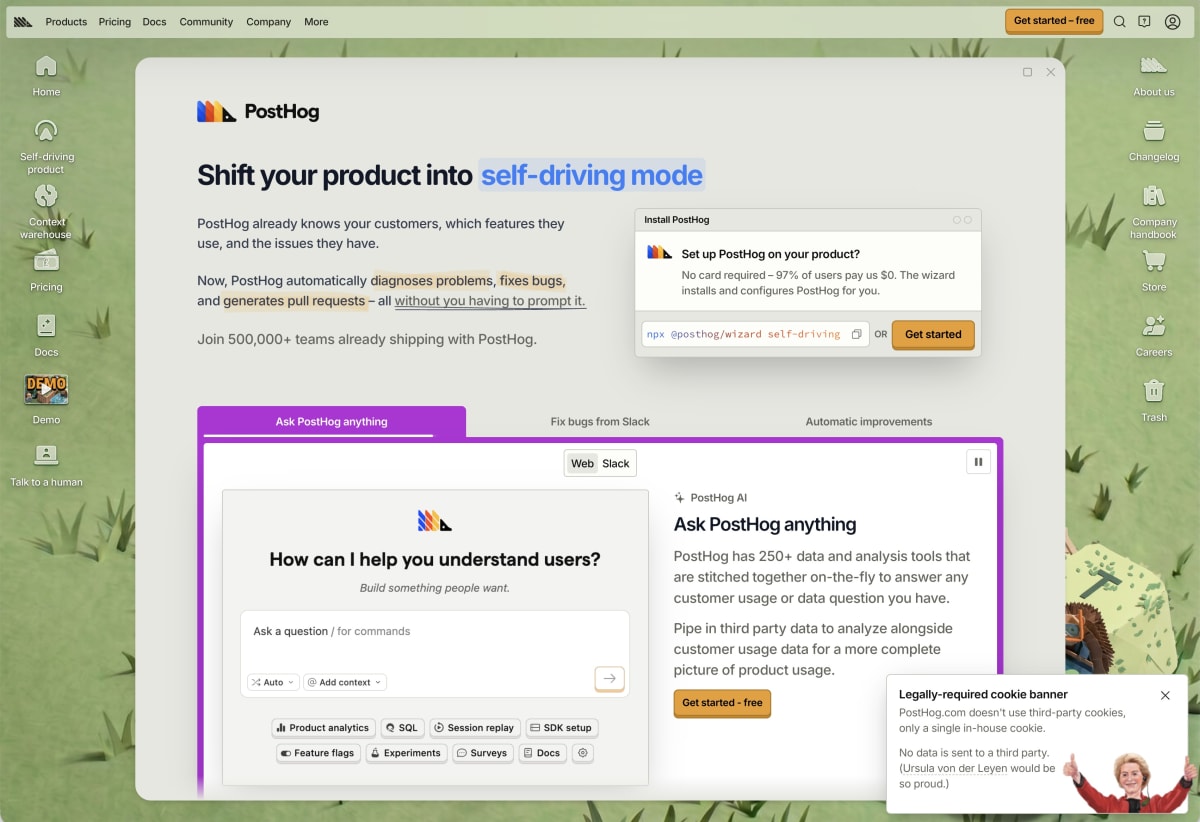
If you are in PostHog’s target market of app developers, you’ll likely be delighted by their website long before you get to buy anything.
But wait, we’re getting ahead of ourselves…
Lead with the delight
For almost the whole song, there is no train safety anywhere, only cute characters eating out-of-date medicine and offering themselves to piranhas. The real message arrives in the closing verse, and the song winks as it makes the switch:
Stand on the edge of a train station platform. Drive around the boom gates at a level crossing. Run across the tracks between the platforms. They may not rhyme, but they’re quite possibly the dumbest ways to die.
By the time you reach train tracks, you are already invested. You have laughed (or at least smiled) at the inanity of the video, and you have caught the chorus. When the “ask” finally comes, you are a receptive audience instead of a defensive one.

This is related to Joe Sugarman’s slippery slide. In the classic book, The Adweek Copywriting Handbook, he argued that the only job of your headline is to get the reader to read the first line, whose only job is to get them to the second, and so on. Each element carries the reader on so smoothly that stopping feels like more effort than continuing.
Now look at your own funnel. Is there anywhere that you are serving the vegetables first? As important as they are, these places are potential leaks in your funnel. Is there anything you can do to earn your visitors’ patience before you spend it?
Give your audience some rhyme time
There is a reason that many people are still singing Dumb Ways to Die hours or days after they’ve seen it. In 2000, psychologists Matthew McGlone and Jessica Tofighbakhsh showed experimental participants real rhyming aphorisms next to reworded versions. For example:
What sobriety conceals, alcohol reveals.
Became:
What sobriety conceals, alcohol unmasks.
Would it surprise you to know that the participants rated the rhyming versions as more accurate descriptions of human behavior, even though the claims were identical? That’s because the rhyme is easier to process, and we quietly mistake that mental fluency for truth. This is the rhyme-as-reason effect.
Of course, you need not be a composer to use it. Marketers have mined this for decades, from Pringles’ “Once you pop, you can’t stop” to Folgers’ “The best part of wakin’ up is Folgers in your cup.”
Backed with the right research, rhymes can work almost anywhere, including product names, headlines, email subjects and more. Find an opportunity and A/B test it out.
As we have said repeatedly over the past twenty years… companies that test, grow to be best.
(You get the idea.)
Absurd specificity makes mental movies
“Be careful around trains” is forgettable because it is abstract; there is nothing to picture. “Use your private parts as piranha bait” is unforgettable because it is absurdly and painfully concrete.
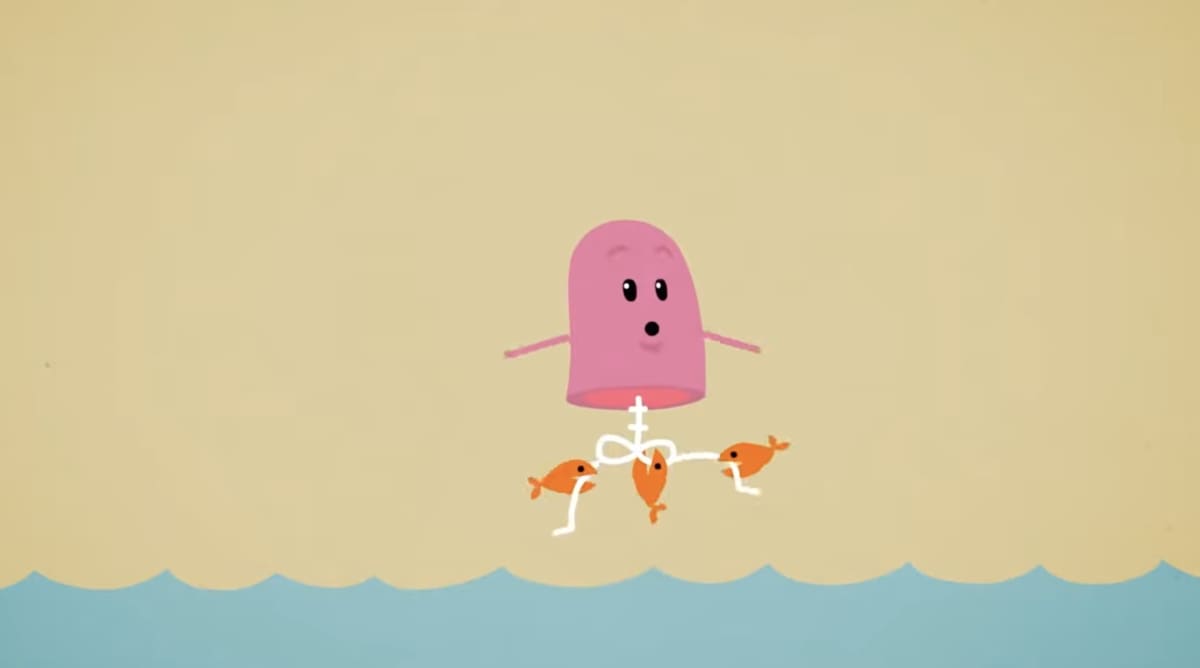
You can see it, however much you would rather not. Every dumb death in the song is a tiny, vivid, particular image, not a general caution.
This is a rule we come back to constantly in this series. Concrete and specific beats the generic, every time. A specific detail plays a mental movie; an abstraction plays nothing.
Find the abstraction in your own copy. Where are you writing “trusted by many businesses” when you could write the one specific, verifiable, pictureable detail that a reader would struggle to forget?
The real lesson
The instinct with an unwelcome message is to keep polishing the warning until it finally lands. “Dumb Ways to Die” suggests the opposite.
Do not say the avoided thing better. Earn the right to say it at all by making something people genuinely want, and letting your real message ride in on its back.
The final safety lines in the song do not rhyme because they did not need to. By the time they land, the audience is already singing.
See you next time on Copywriting Friday.
How much did you like this article?
What’s your goal today?
1. Hire us to grow your company
We’ve generated hundreds of millions for our clients, using our unique CRE Methodology™. To discover how we can help grow your business:
- Read our case studies, client success stories, and video testimonials.
- Learn about us, and our unique values, beliefs and quirks.
- Visit our “Services” page to see the process by which we assess whether we’re a good fit for each other.
- Schedule your FREE website strategy session with one of our renowned experts.
Schedule your FREE strategy session
2. Learn how to do conversion
Download a free copy of our Amazon #1 best-selling book, Making Websites Win, recommended by Google, Facebook, Microsoft, Moz, Econsultancy, and many more industry leaders. You’ll also be subscribed to our email newsletter and notified whenever we publish new articles or have something interesting to share.
Browse hundreds of articles, containing an amazing number of useful tools and techniques. Many readers tell us they have doubled their sales by following the advice in these articles.
Download a free copy of our best-selling book
3. Join our team
If you want to join our team—or discover why our team members love working with us—then see our “Careers” page.
4. Contact us
We help businesses worldwide, so get in touch!
© 2026 Conversion Rate Experts Limited. All rights reserved.
A Brandwidth Group Company.