Copywriting Friday: How to sell something ordinary
Copywriting Friday highlights the tools and techniques of persuasive content. Some of the examples may seem dated, but the principles are timeless (and critical for conversion rate optimization). Enjoy.
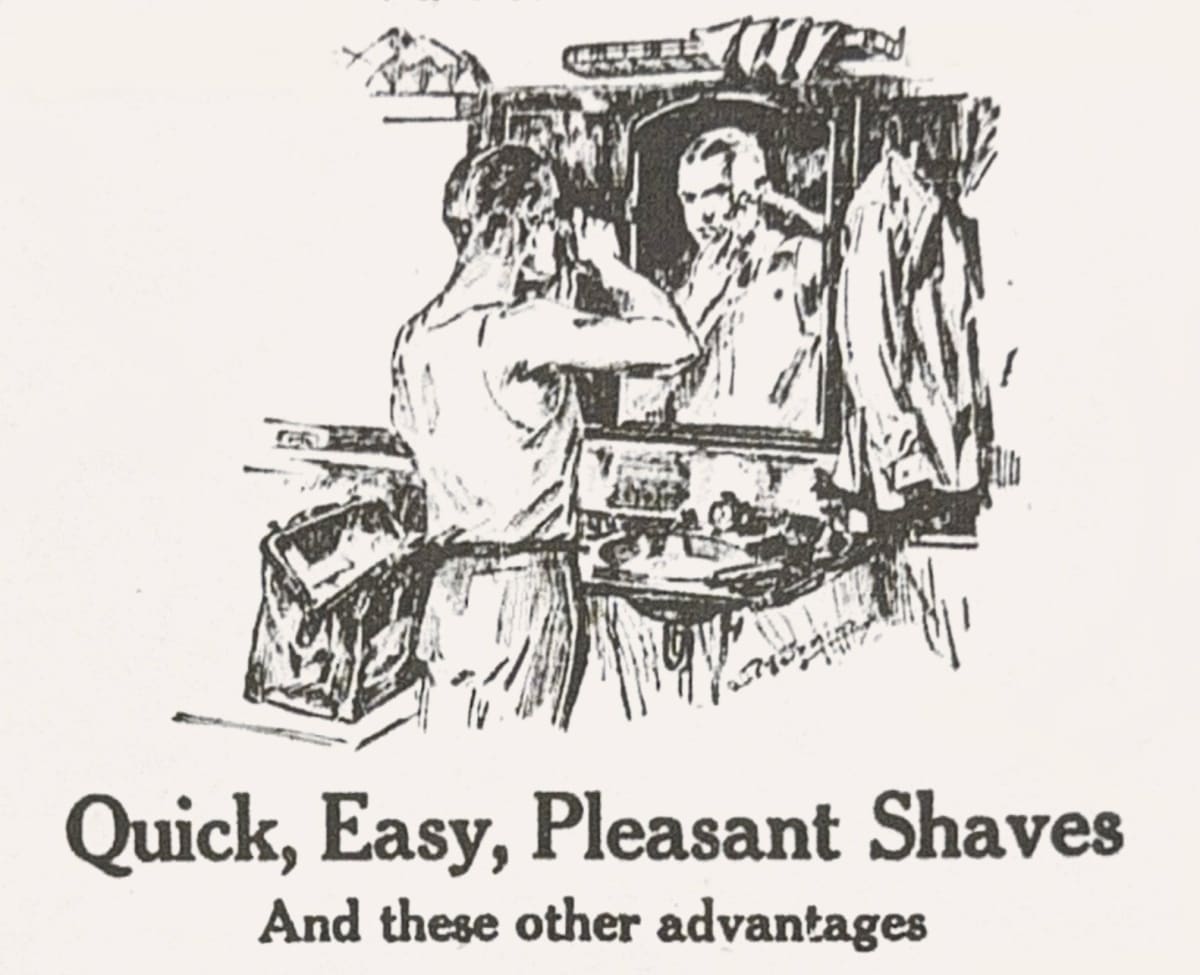
The ad we’re looking at today is a hundred-year-old answer to that question. It’s for Palmolive Shaving Cream, written by Claude Hopkins… perhaps the original conversion rate optimizer. Hopkins was blunt about the problem he faced:
Practically all the users of shaving cream were wedded to certain brands. Perhaps most of them had used these brands for years, and they liked them. Our problem was to win users from one brand to another.
One can hardly claim in a shaving soap exceptional effects. That is not logical.
Most of Hopkins’s contemporaries would have reached for louder adjectives to try switching customers to their brand, but he went in a different direction. Instead of trying to out-write his rivals, he out-researched them.
And the approach he used is a core part of our methodology, over a century later.
How Hopkins built an ad from the ground up
1. He asked the market what it wanted
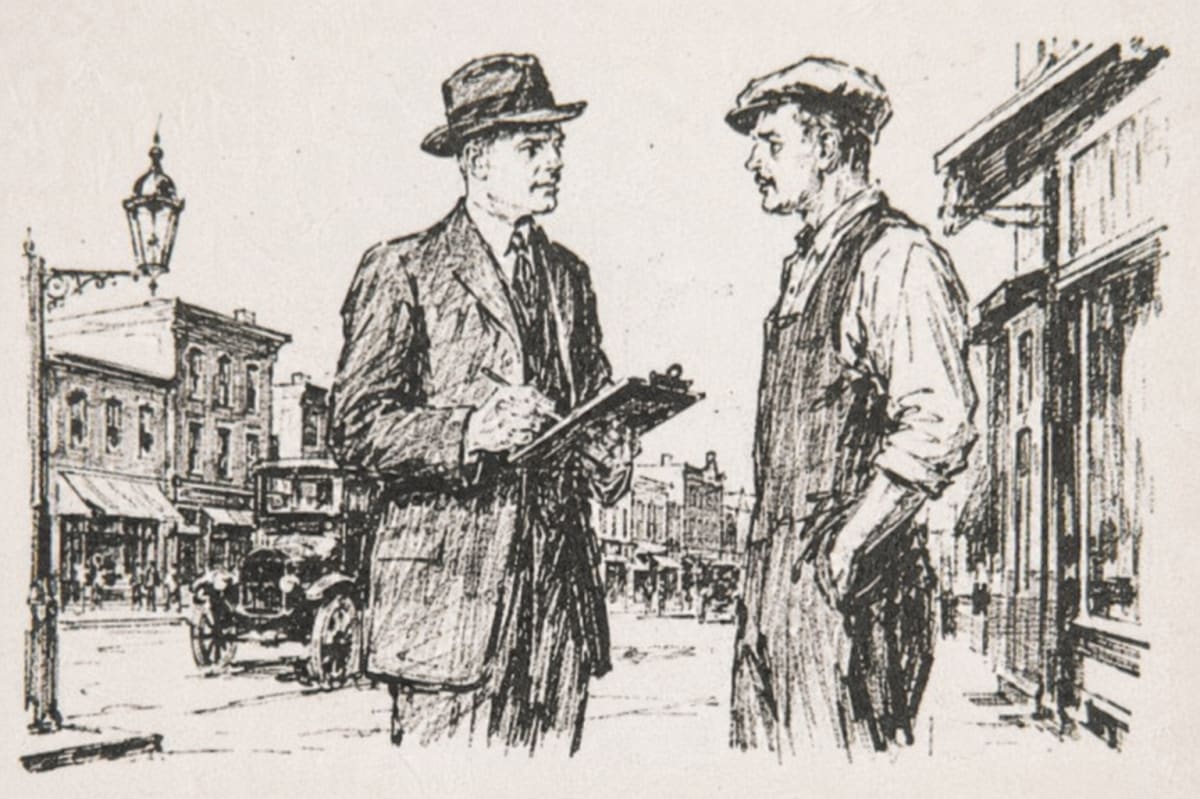
Before a word of copy was written, Hopkins went looking for the truth. Here’s how he described what happened in his book, My Life In Advertising:
I sent out some research men to interview men by the hundreds. I asked them what they most desired in a shaving cream.
Notice what this is: voice-of-customer research, run as fieldwork, in the 1920s. Three desires came back clearly. The market wanted abundant lather, quick action on a tough beard, and lather that lasted long enough to finish the whole shave.
That list became an input for everything that followed. If you are trying to persuade people to buy something, knowing what they want (in their own words) is extraordinarily valuable.
How could you use this? Our five golden questions exist to pull exactly that out of your customers. The first move in Hopkins’s method is the one that many marketers skip. If research seems like a lot of effort, keep in mind that almost all of the Win Reports we’ve published have their roots in deep research.
2. He measured what mattered
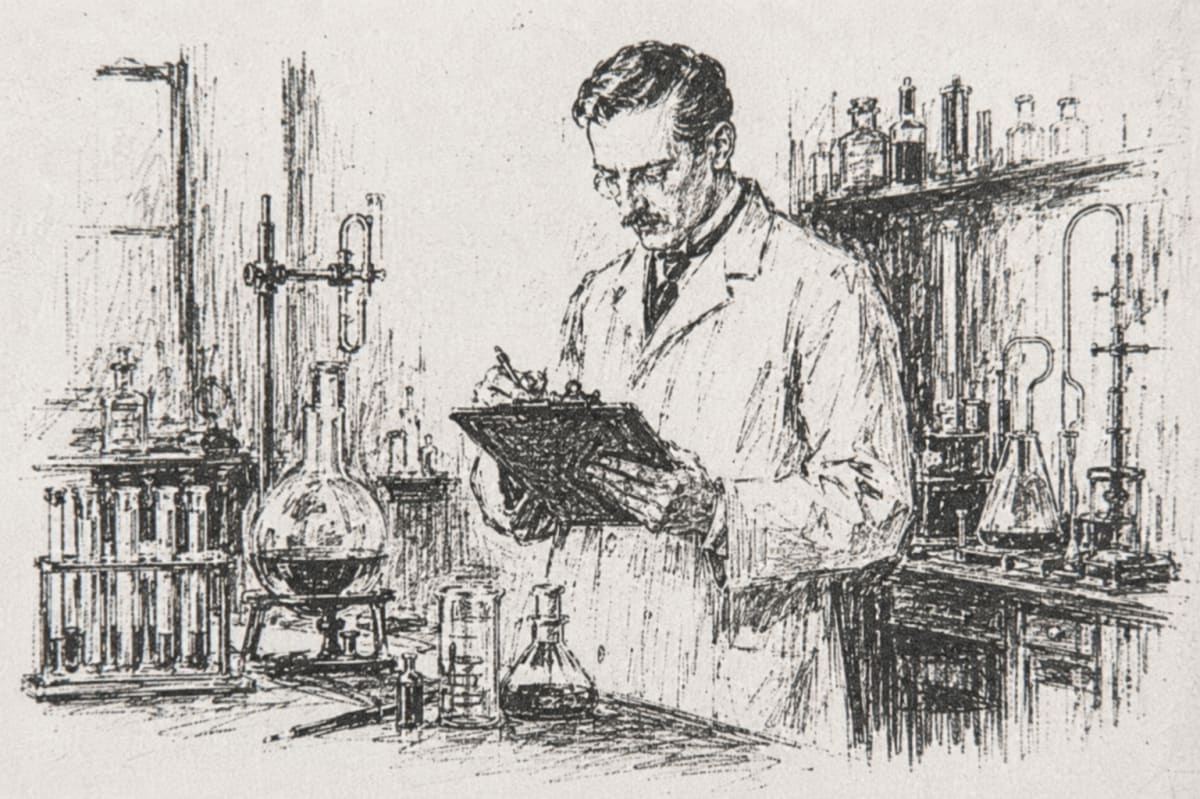
You might think that the three desires discovered above were all the gold dust Hopkins needed to create a great ad, but he had something else in mind. He took the customers’ wishlist to V. C. Cassidy, Palmolive’s chief chemist, and told him:
These are the factors men want. They may get them in other shaving creams, but nobody yet has told them. Give me actual data on these results as applied to Palmolive Shaving Cream.
Note that Hopkins wasn’t asking the chemist to invent advantages, but to measure the things men already said they wanted. The figures came back one by one:
- Men wanted abundant lather. Cassidy proved Palmolive multiplied itself in lather 250 times.
- Men wanted quick action. Tests showed the beard absorbed 15% of water within one minute, enough to make the hair wax-like for cutting.
- Men wanted lather that lasted. The chemist proved that it retained creamy fullness for ten minutes on the face.
Because Palmolive was the first soap company to understand what mattered to its market, it was also the first to publish hard numbers. And, as we know, hard figures often persuade readers where adjectives bounce off.
How could you use this? Which of your general claims could you replace with a measured figure? We understand that regular readers will have seen this advice before, but we repeat it because it matters. It worked 100 years ago; it still works now.
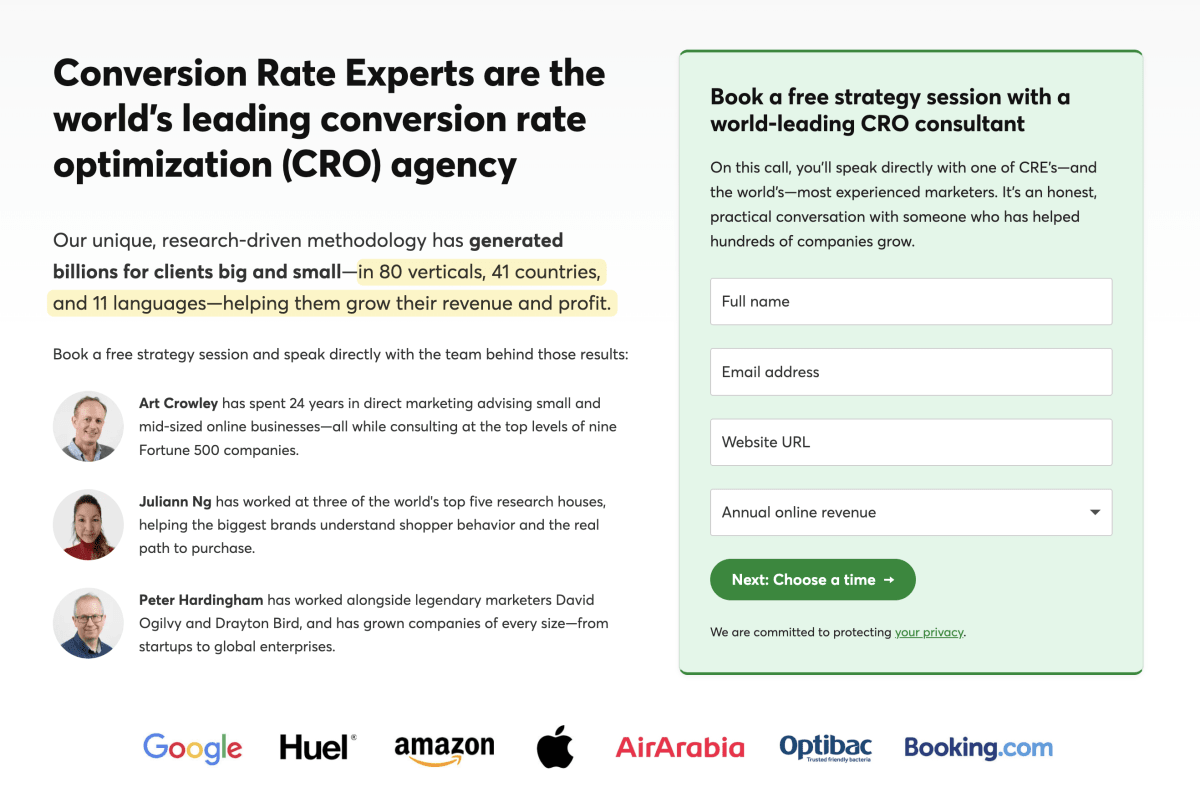
Consider the top of our CRO agency page (highlighting added):
3. He said it out loud… first
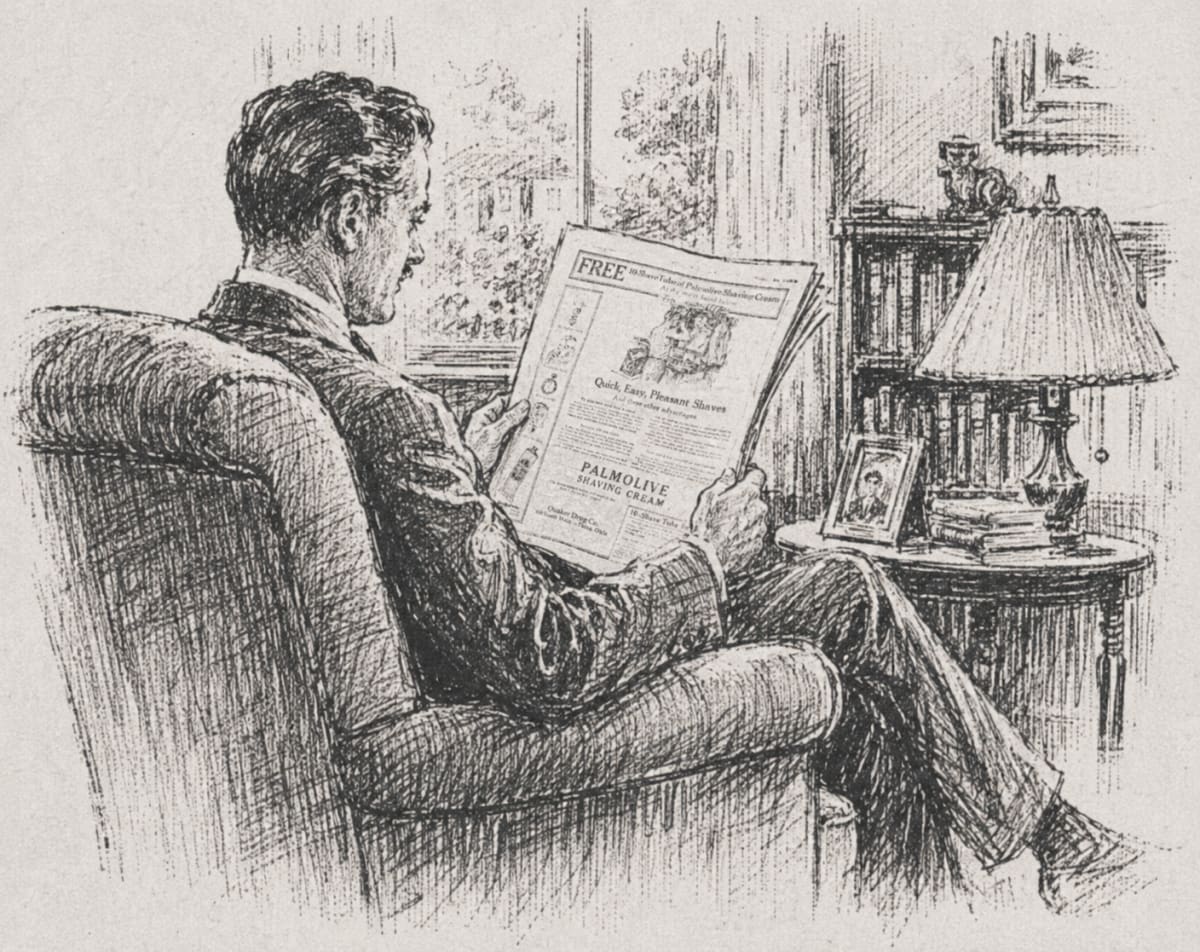
Once Hopkins had asked and measured, he could say things that no rival had bothered to say despite having similar products. Here’s a full version of the ad that Hopkins created:
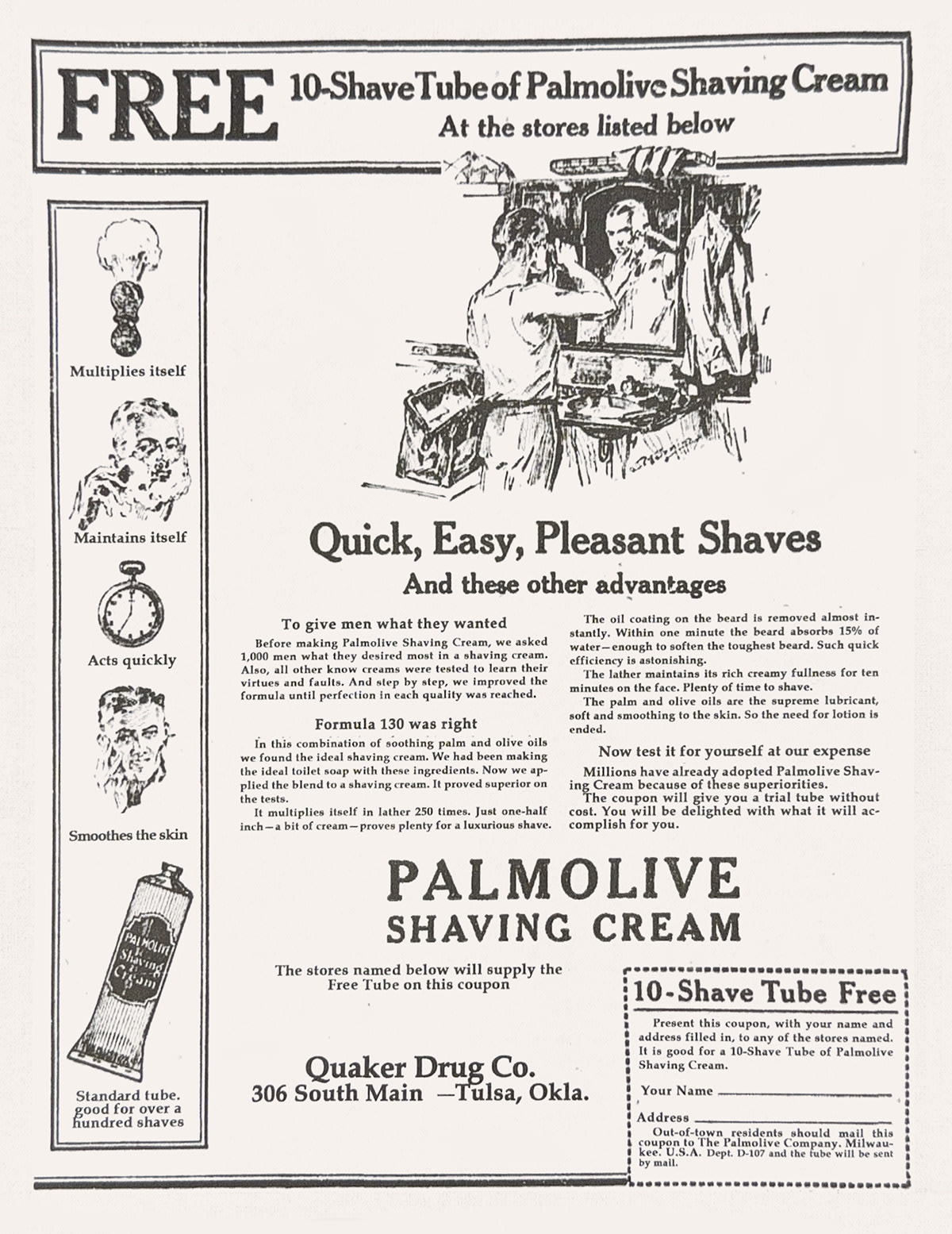
Don’t be surprised to see that Hopkins highlights key aspects of the product in the left-hand column, but he doesn’t leave it there. He starts the main copy by showing his work:
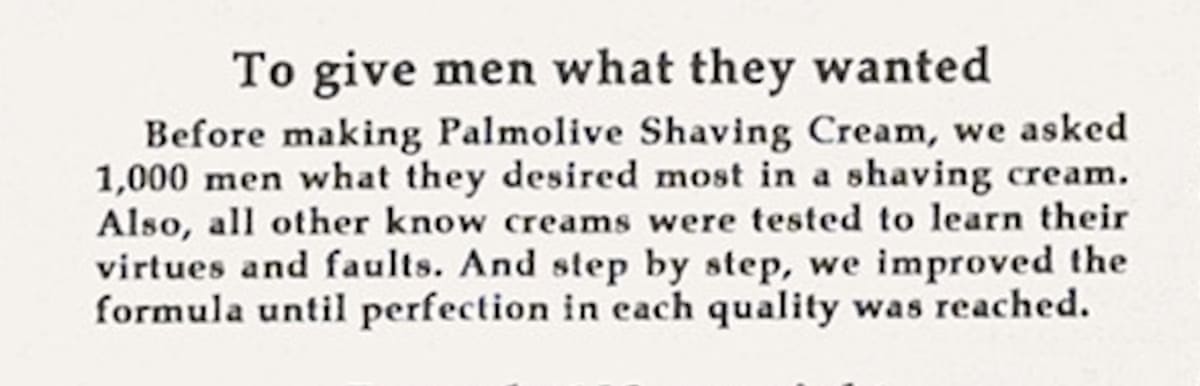
If you were a man who shaved regularly, wouldn’t you be interested in a brand that had done its research… and then delivered on what 1,000 other men said they wanted?
They wanted abundant lather:

They wanted quick action:

They wanted foam that lasted:

As Hopkins said:
Probably other shaving creams could meet the same specifications… But we were the first to give figures on results. And one actual figure counts for more than countless platitudes.
Taking ownership of common properties wasn’t a new strategy for Hopkins. He’d proven it decades earlier by describing the sterilization process that Schlitz beer (and every other brewery) used… but hadn’t mentioned to drinkers. (Advertisers would later name this technique the preemptive claim.)
When you know what to say, the marketing writes itself
We could talk about the many other techniques the ad uses, but that risks obscuring the takeaway.
Strip this ad back, and the product is ordinary. Palm oil, olive oil, lather, and a shave job a dozen rivals could match. Hopkins’s method was not ordinary, but neither was it outrageously complicated or out of reach for companies today, especially given the tools we all have at our disposal:
- Ask your market what it wants.
- Measure your product or service against those desires.
- Be first to say them out loud, consistently, and in figures if at all possible.
A century on, that loop is still one of the most profitable ideas in marketing. And yet a surprising number of companies still struggle to “wear out the boot leather” when it comes to research, and consequently leave money on the table. Often, a lot of money.
Knowing your market makes everything easier. Imagine Hopkins sitting down to write, his notes at his side. With his research collected, the copy would have more or less written itself.
See you next time on Copywriting Friday.
How much did you like this article?
What’s your goal today?
1. Hire us to grow your company
We’ve generated hundreds of millions for our clients, using our unique CRE Methodology™. To discover how we can help grow your business:
- Read our case studies, client success stories, and video testimonials.
- Learn about us, and our unique values, beliefs and quirks.
- Visit our “Services” page to see the process by which we assess whether we’re a good fit for each other.
- Schedule your FREE website strategy session with one of our renowned experts.
Schedule your FREE strategy session
2. Learn how to do conversion
Download a free copy of our Amazon #1 best-selling book, Making Websites Win, recommended by Google, Facebook, Microsoft, Moz, Econsultancy, and many more industry leaders. You’ll also be subscribed to our email newsletter and notified whenever we publish new articles or have something interesting to share.
Browse hundreds of articles, containing an amazing number of useful tools and techniques. Many readers tell us they have doubled their sales by following the advice in these articles.
Download a free copy of our best-selling book
3. Join our team
If you want to join our team—or discover why our team members love working with us—then see our “Careers” page.
4. Contact us
We help businesses worldwide, so get in touch!
© 2026 Conversion Rate Experts Limited. All rights reserved.
A Brandwidth Group Company.