Copywriting Friday: Limitless paper in a paperless world
Copywriting Friday highlights the tools and techniques of persuasive content. Some of the examples may seem dated, but the principles are timeless (and critical for conversion rate optimization). Enjoy.
Its Scranton branch is run by Michael Scott, a well‑meaning manager who badly wants to be loved, with Pam on reception and Jim and Dwight as rival salesmen. Head office is known to everyone as Corporate, and the whole thing is filmed as a fake documentary, with the staff confiding in the camera crew.
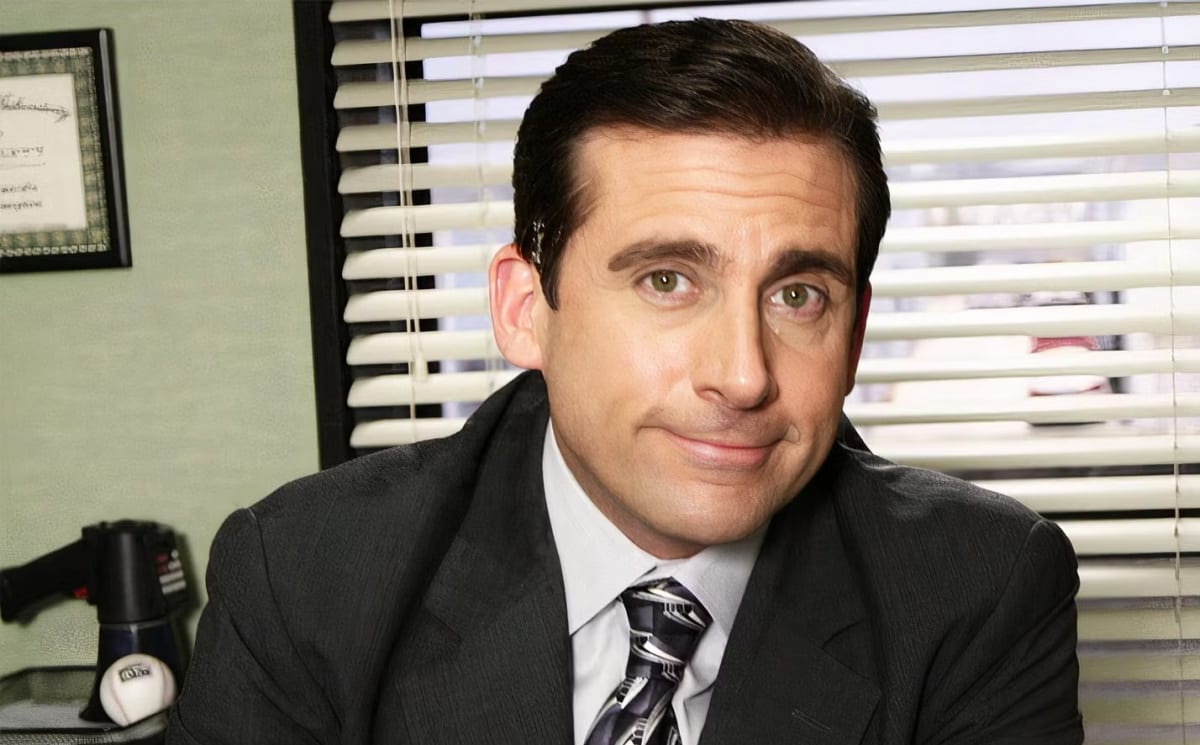
This is our third trip into shows that we love, after Better Call Saul and Mad Men. The first two gave us a conversion genius and an agency at its best. The Office… provides a different kind of lesson.
After reading this Copywriting Friday, you’ll come away with:
- A five‑second test for your homepage, and the throwaway joke that tells you what to look for.
- A real A/B test where a plain, product‑first hero beat a beautiful lifestyle video.
- What to watch out for in “creative” meetings.
Let’s get into it.
The creativity trap
The game is on. Corporate has bought TV advertising time on the local station. Michael is excited, then appalled, as he realizes that Scranton’s part amounts to five seconds of waving at the end of the Corporate ad. He sends the advertising consultants away and talks Corporate into considering a version he’ll direct himself.
Cue bad ideas, creative differences, and Pam staying up half the night to animate a logo.
Inevitably, Corporate rejects Michael’s ad, and ten days later the team gathers at their local bar to watch what Michael calls the “brain‑dead” version…
The Corporate ad is exactly as promised. A businessman stumbles around a big‑box office supply store, trying to get personal attention from uncaring workers. As he fails, the ad ends with a shot of the Scranton branch and five seconds of the team… waving.
When someone compliments the ad, Michael can no longer hold himself back:
“People are stupid. People like waving. Waving sells, not art. The ad we made, our ad, the real one, was full of humor, and full of depth, and full of heart, and it was real.”
Seeing what the waving does to his boss, Jim gets the barmen to put Michael’s “Director’s cut” into the DVD player.
Cue the art.
Set to the theme from Chariots of Fire, Michael’s ad is a minute of earnest abstraction about how ideas start and spread. Paper is on screen throughout (a memo passed hand to hand, a paper airplane, a newspaper headline), but only as a prop for feelings.
“It all starts with an idea, but you can never tell where an idea will end up because ideas spread. They change, grow, and connect us with the world. In a fast‑moving world where good news moves at the speed of time and bad news isn’t always what it seems, when push comes to shove, we all deserve a second chance… to score."
The voiceover only gets to the actual product in its very last line:
“Dunder Mifflin. Limitless paper in a paperless world.”
The team cheers, of course, because they are all in it. (They cheered the waving too.) But only one of these ads is the one Michael calls real, and that’s the creativity trap. It’s possible to have great‑looking content that leaves an audience cold or confused. The video is all the things Michael said it was… full of depth and heart.
But it wasn’t an ad.
A video can delight its creators and still leave a stranger with no reason to buy. Although Michael would disagree, the corporate ad is clearer. It shows:
- A real problem (poor service from big‑box stores).
- An actual solution (a local branch with real faces).
One New York ad agency, Benton & Bowles, used to say, “It’s not creative unless it sells.”
Michael’s ad, by contrast, is about how he wants to feel about his company.
Emotion is fine. Don Draper’s Carousel pitch is pure feeling, but it’s a feeling the customer gets to have about the product. Michael’s ad gives the feeling to its maker. So the useful question to ask of any emotional ad is… whose feeling is this?
Plain language almost always beats branding waffle, and “Limitless paper in a paperless world” is branding waffle with a straight face.
Real-world example
DiamondBack Covers makes rugged, lockable aluminum truck bed covers. Customer surveys told us the main reason people bought was security. The homepage headline mentioned security, but behind it, the hero (the big banner at the top of the page) played a beautifully shot lifestyle video of campfires, sand dunes, and mountain trails.
In our user testing, participants found the adventure footage confusing for a company that just sells covers. The headline mentioned security. The video was all adventure.
We rebuilt the hero around a product‑focused video showing the cover’s security and weatherproofing, with a more direct, benefit-led headline and subhead.
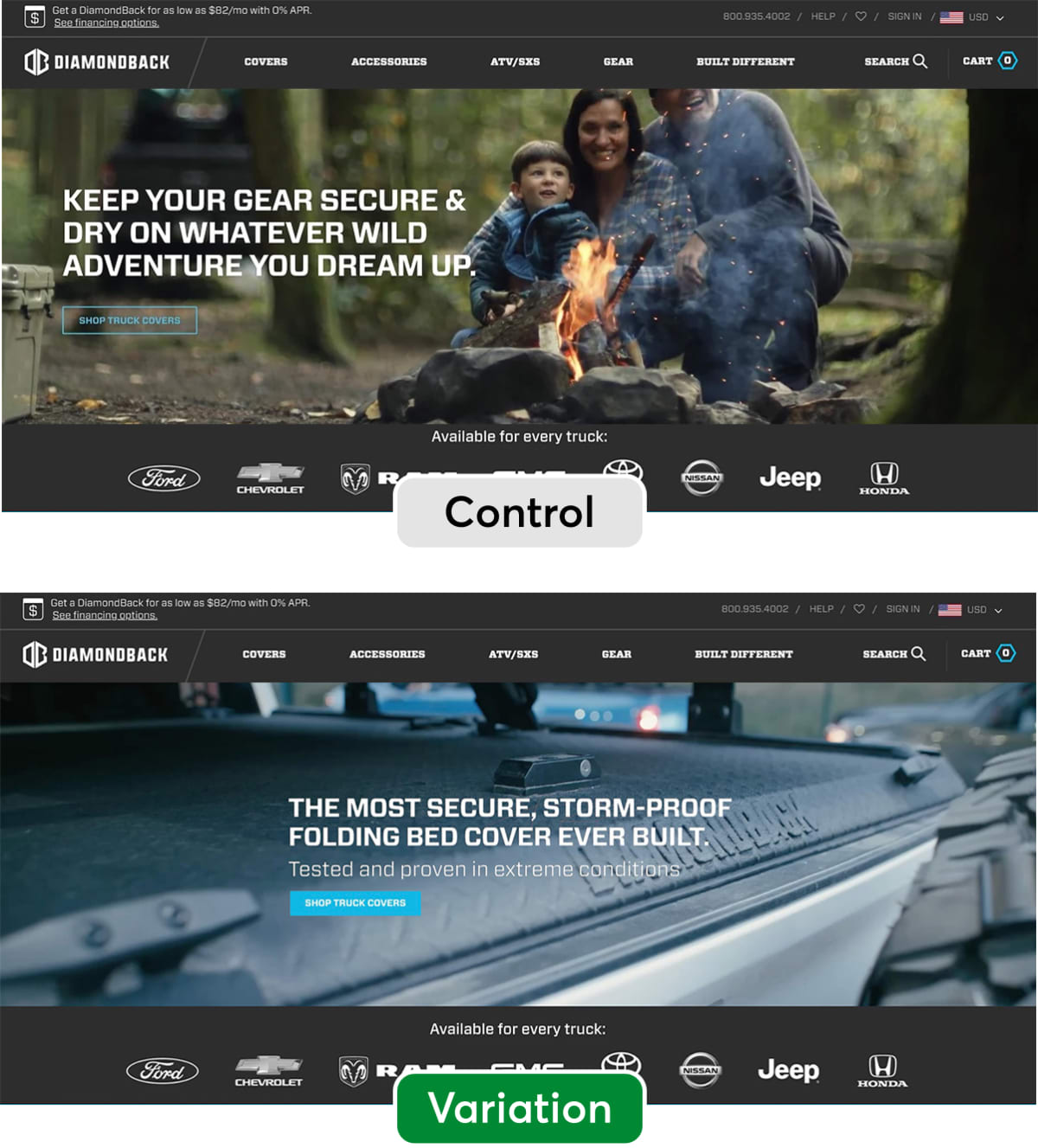
Michael would have hated it. It was basically waving. But conversions rose 26%.
The ad’s biggest job (AKA the muffin problem)
Earlier in the episode, Jim confides to the camera that hardly anyone has heard of Dunder Mifflin.
“I think it’s great that the company’s making a commercial because not very many people have heard of us. When I tell people that I work at Dunder Mifflin, they think that we sell mufflers, muffins, or mittens. Frankly, all those sound better than paper, so I let it slide.”
It’s a throwaway joke, but it’s also the basic brief for the ad. The people Jim meets have no idea what Dunder Mifflin does. Whatever else the ad delivers, it has to fix that.
Unfortunately, the “director’s cut” leaves the question open for well over a minute. Someone who didn’t know Dunder Mifflin could watch the first 70 seconds and still be no wiser, because the paper on screen is memos and newspapers, which everyone has.
Ironically, it’s only Pam’s animated logo in the last few seconds that really answers the question.
Michael’s ad fumbles the brief, but the important thing here is to notice who spotted the problem. Jim is a salesman. His job is to explain what the company does and how it can help.
The people who explain your business all day (salespeople, support staff, whoever answers the phone) often understand your customers better than anyone. They also know your muffins, the things people wrongly assume about you.
So here’s the five‑second test, with a target.
Ask your front line what prospects most often get wrong about what you do. Then cover your logo, mute any video, and show your homepage to a stranger for five seconds. If they make the same mistake, you’ve made Michael’s ad.
Vetoing the best bit
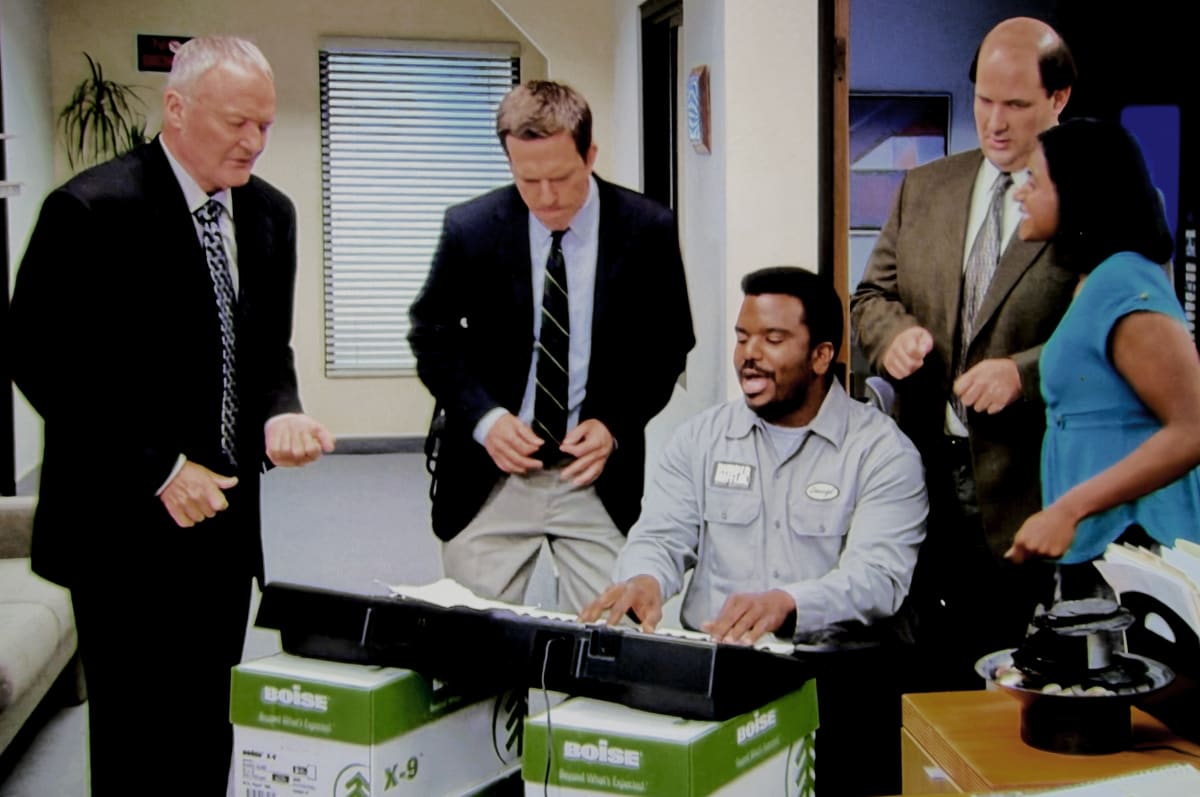
During early production of Michael’s ad, Darryl from the warehouse works with the team on a potential jingle. What follows might be the best marketing Dunder Mifflin produced all episode.
“Out of paper, out of stock. There’s friendly faces around the block. Break loose from the chains that are causing you pain. Call Mike and Stanley, Jim, Dwight, and Creed. Call Andy and Kelly for your business paper needs. Call Dunder Mifflin. People, faces, people, people. Dunder Mifflin. People, faces, people, people.”
In a few short lines, the jingle:
- Calls out the problem (running out of paper).
- Calls out the benefit (friendly faces around the block).
- Names the people you’ll deal with (emphasizing personal service).
- Gives a clear CTA (call Dunder Mifflin).
The lyrics even work in a pun on breaking loose from the chains, at the expense of the big chain stores. It’s essentially a better version of the Corporate message… with a tune.
Predictably, Michael shuts it down. “This is not me. This is not my music.”
If you’re like us, you might have sat in creative meetings like this. Look at Michael’s reasoning. He doesn’t say the jingle won’t sell. He says it doesn’t sound like him.
That’s how good marketing can die inside a business. Everyone has an opinion; the most senior opinion wins, and nobody checks what would really work. It’s why it’s important to focus on functional, data-driven design, rather than gut instinct.
The next time your team wants to veto a draft, try to say what it would cost you in sales. If you can’t be sure it would, or the honest answer is “I don’t like it,” consider putting it in front of customers. Run an A/B test if you have the traffic. If you don’t, even showing both versions to five prospects will tell you far more than taste alone.
Did Michael get the last laugh?
In 2007, Michael’s customers didn’t want limitless paper in a paperless world. They wanted paper, delivered on time, by someone who picks up the phone when they call.
A few years later, they were buying it by the carton when NBC Universal licensed Dunder Mifflin paper to Quill.com, complete with Michael’s “limitless paper” line printed on the packaging.

So was Michael right all along?
Not quite. By 2011, Dunder Mifflin’s muffin problem was long solved. Nine seasons and 201 episodes had told millions of people exactly what they did, and who they’d be buying it from. To a stranger, “Limitless paper in a paperless world” is branding waffle. To a fan, it’s an inside‑joke they’re delighted to be in on.
The words never changed. The audience did. And the feeling finally belonged to the customer.
That’s the way out of the creativity trap. Clever copy works on people who already know you. Everyone else needs the waving first… what you sell, who you are, and why you beat your competitors.
So unless you’ve got a lot of brand awareness behind you, it pays to wave first.
See you next time on Copywriting Friday.
How much did you like this article?
What’s your goal today?
1. Hire us to grow your company
We’ve generated hundreds of millions for our clients, using our unique CRE Methodology™. To discover how we can help grow your business:
- Read our case studies, client success stories, and video testimonials.
- Learn about us, and our unique values, beliefs and quirks.
- Visit our “Services” page to see the process by which we assess whether we’re a good fit for each other.
- Schedule your FREE website strategy session with one of our renowned experts.
Schedule your FREE strategy session
2. Learn how to do conversion
Download a free copy of our Amazon #1 best-selling book, Making Websites Win, recommended by Google, Facebook, Microsoft, Moz, Econsultancy, and many more industry leaders. You’ll also be subscribed to our email newsletter and notified whenever we publish new articles or have something interesting to share.
Browse hundreds of articles, containing an amazing number of useful tools and techniques. Many readers tell us they have doubled their sales by following the advice in these articles.
Download a free copy of our best-selling book
3. Join our team
If you want to join our team—or discover why our team members love working with us—then see our “Careers” page.
4. Contact us
We help businesses worldwide, so get in touch!
© 2026 Conversion Rate Experts Limited. All rights reserved.
A Brandwidth Group Company.