Win Report: How supply-side CRO lifted sign-ups by 15%
Win Reports help you grow your business by showing our methodology at work. Each Win Report showcases a real-world test, sharing the research, insights, and techniques that led to the win.
Our client runs a large online marketplace for private tutoring in the United States. Students post what they need help with, and local tutors apply to teach them.
Research: A marketplace has two sides
Like any marketplace, our client’s business required both demand-side and supply-side thinking. Naturally, they wanted as many students as possible to search, choose, and pay for private tuition. That’s the demand side. But they also understood that no matter how good their demand-side CRO, they could never convert a student who could not find a tutor to teach them.
(In terms of the Theory of Constraints, you can’t add students faster than you can add tutor capacity.)
When we discussed supply-side optimization with our client, they pointed to their tutor registration form. This page was presented as a standard sign-up form to register with the marketplace. That made sense, but when we looked at the page’s traffic sources, we saw that many of the people landing there were coming directly from job-search sites.
In other words, the visitors weren’t expecting a general tutoring platform to join—they were looking for work.
How could we meet these potential tutors where they were in their search and make it clear that our client had real students waiting?
The original page (or control)
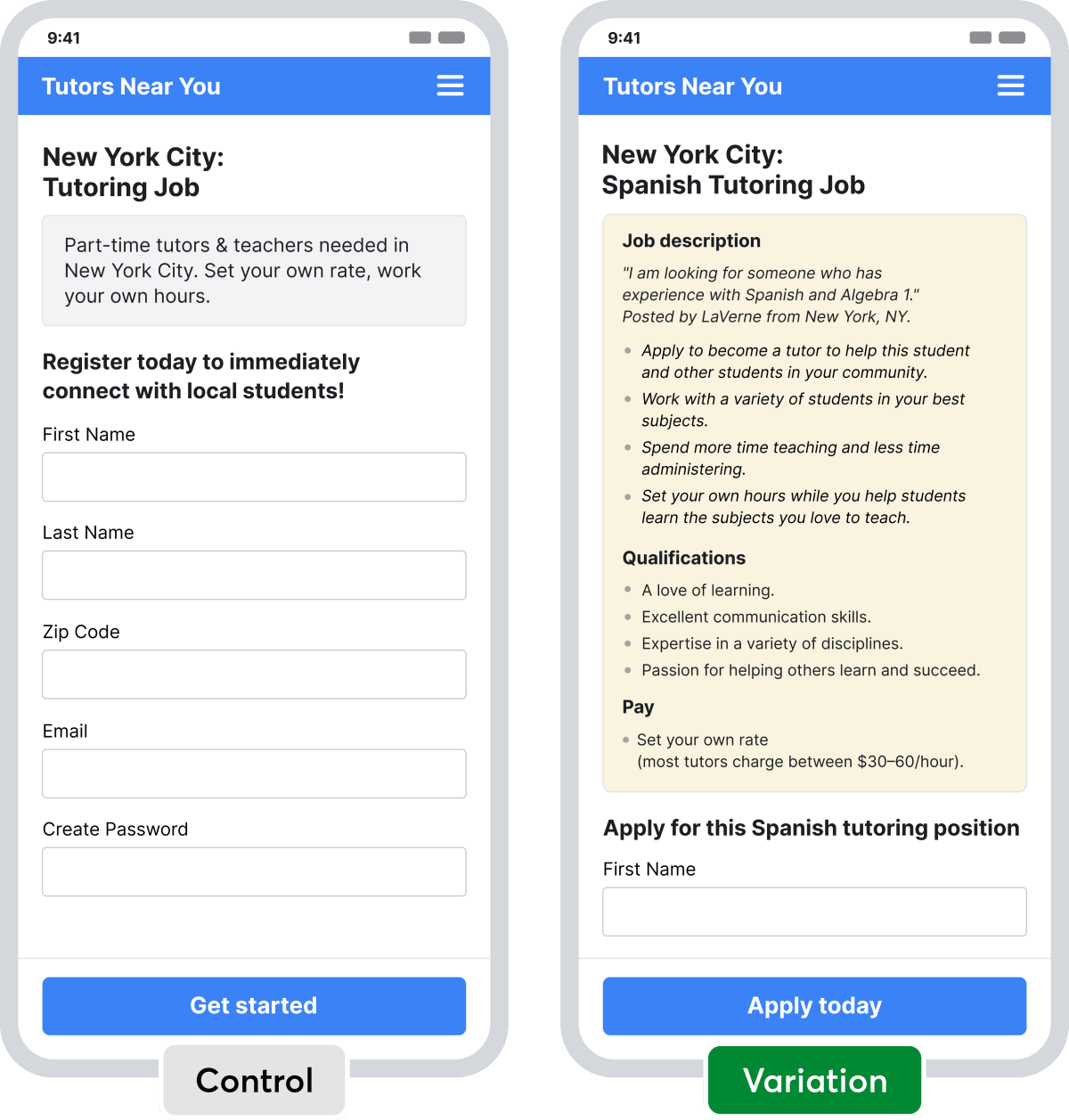
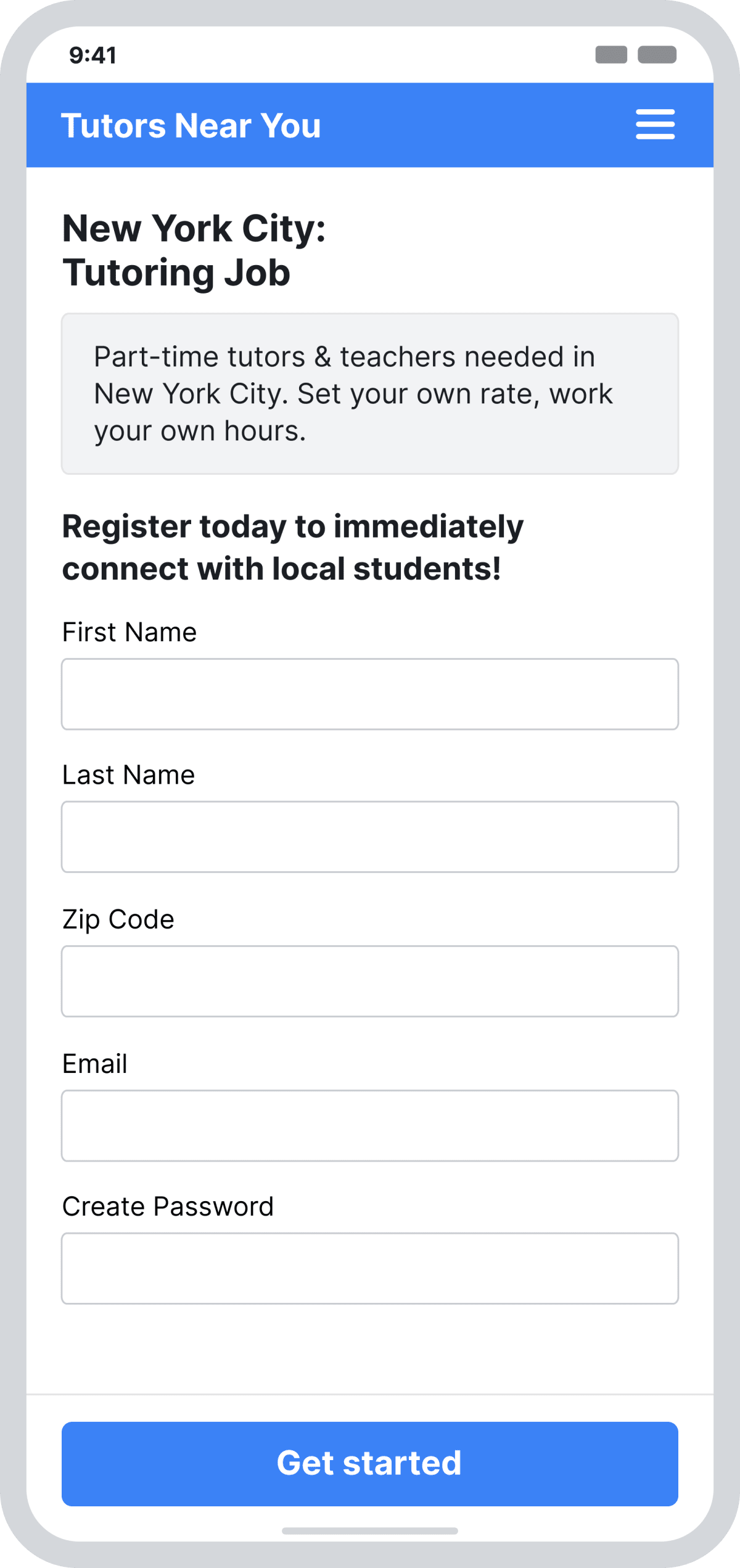
Here’s a mockup of the original tutor recruitment page. There were different pages for different locations (e.g. Tutoring Job in New York City) but the content was mostly just a registration form.
The tested page (or variation)
Here’s a mockup of our variation. The most prominent addition was a genuine tutor request from a real live user of the platform.
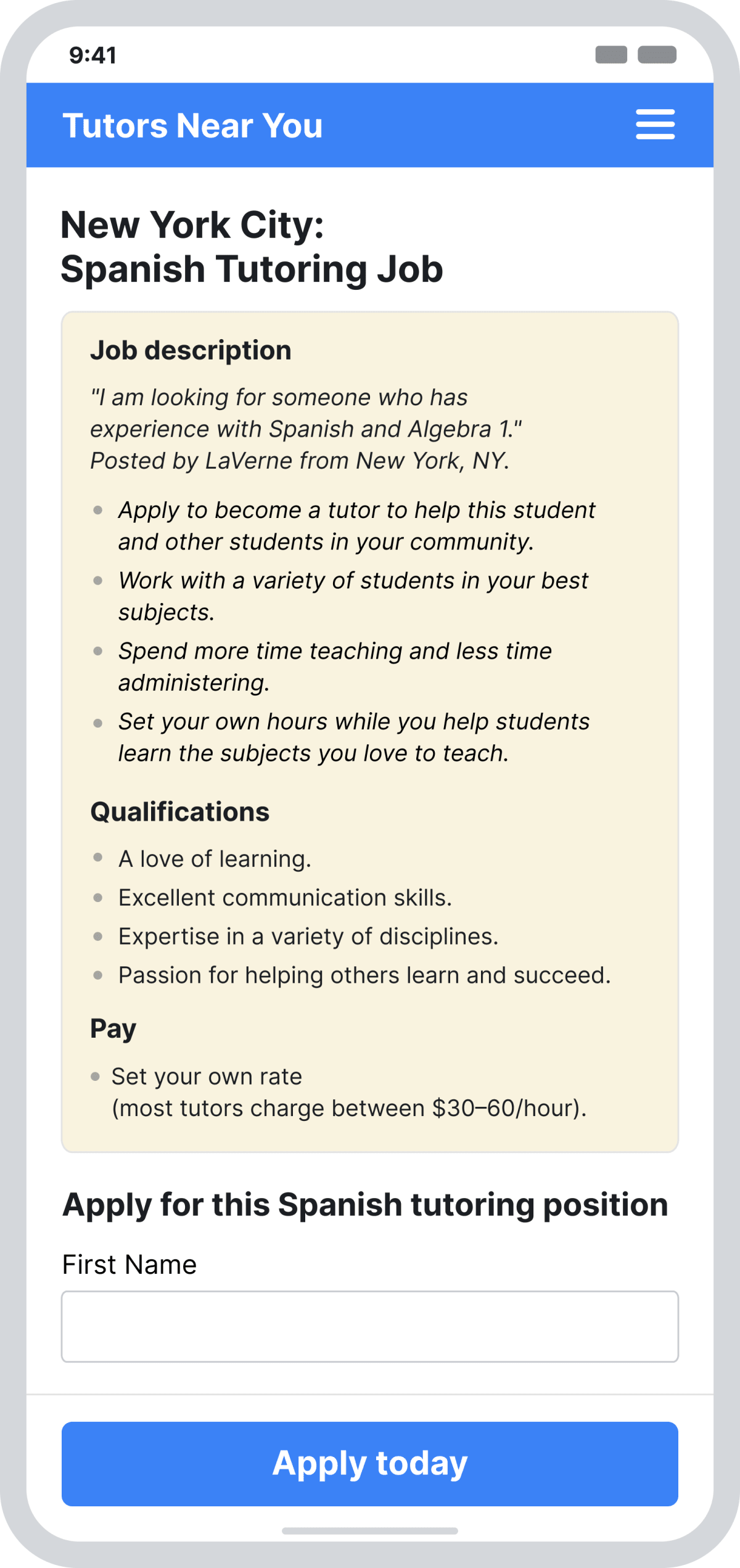
In detail, our changes included:
- A headlined job title. The headline named the actual subject as well as the city.
- A real student request. We opened the page with the real posting from a real student—“I am looking for someone who has experience with Spanish and Algebra 1.”
- A brief job specification. Description, qualifications and pay, set out as scannable bullets under those three headings, including the hourly range most tutors charge.
You’ll notice that the page also switched from “register” language to “apply” language, as we promoted the potential benefits of being on the platform:
- Apply to become a tutor to help this student and other students in your community.
- Work with a variety of students in your best subjects.
- Spend more time teaching and less time administering.
- Set your own hours while you help students learn the subjects you love to teach.
Result: Tutor applications increased by 15%
During the test, we observed a 15% increase in tutor applications—or an increase of around 20,000 in the first year.
It’s worth remembering that while this win will not show up directly as revenue, every additional tutor makes the marketplace slightly better at serving the next student who will pay for help with Spanish, or Algebra, or the cello.
The fact that supply-side improvements are slower to reach the bottom line is precisely why they are sometimes neglected. Meanwhile, they are often the least optimized surface a business owns, which is another way of saying they are a great place to find significant wins.
What next?
As usual, we added the test to our proprietary Wins Database, then looked for ways to apply its lessons to other parts of the client’s business and then to other clients.
If you want us to grow your profits—quickly and efficiently—check if you qualify for a free one-on-one strategy session with one of our CRO consultants.
We’ll only work with you if we believe we can get amazing results together. Our success has come entirely from positive word of mouth, and we plan to keep it that way.
How much did you like this article?
What’s your goal today?
1. Hire us to grow your company
We’ve generated hundreds of millions for our clients, using our unique CRE Methodology™. To discover how we can help grow your business:
- Read our case studies, client success stories, and video testimonials.
- Learn about us, and our unique values, beliefs and quirks.
- Visit our “Services” page to see the process by which we assess whether we’re a good fit for each other.
- Schedule your FREE website strategy session with one of our renowned experts.
Schedule your FREE strategy session
2. Learn how to do conversion
Download a free copy of our Amazon #1 best-selling book, Making Websites Win, recommended by Google, Facebook, Microsoft, Moz, Econsultancy, and many more industry leaders. You’ll also be subscribed to our email newsletter and notified whenever we publish new articles or have something interesting to share.
Browse hundreds of articles, containing an amazing number of useful tools and techniques. Many readers tell us they have doubled their sales by following the advice in these articles.
Download a free copy of our best-selling book
3. Join our team
If you want to join our team—or discover why our team members love working with us—then see our “Careers” page.
4. Contact us
We help businesses worldwide, so get in touch!
© 2026 Conversion Rate Experts Limited. All rights reserved.
A Brandwidth Group Company.