Growth for seasonal businesses: How CRO helps you win when it matters most

On the face of it, neither state appears well-suited to running an effective CRO program, and yet, the pressure to beat (or even meet) previous sales numbers is uniquely intense. Failure in the peak season is not an option.
When we spoke to one seasonable business, they summed up the challenge well:
“Christmas makes or breaks the whole year for us. I’m always nervous until I see the sales figures.”
The low traffic paradox
When traffic and cash flow fall, seasonal businesses face a subtle psychological trap. On one hand, resources for investment feel scarce. On the other, working on conversion rate can feel impossible when you have little or no traffic. The benefits to the bottom line feel too hard to get and too far away.
Psychologists call this present bias—our tendency to favor actions that produce immediate results over those whose rewards arrive later.
Practically, it means that some seasonal businesses focus on things that feel productive during low season but may deliver little real value (new campaigns, designs, or partnerships), while others enter a hibernation period. Neither helps much when the next peak season arrives, and both paths come at the expense of activity that will bring far more growth later on.
In fact, the low season is the best time to start your CRO program. You have the time and space to think strategically and do the research and testing that will pay off later. That way, when the peak season comes, your improvements can scale across thousands or millions of visitors.
In this article, we show the strategies that successful seasonal businesses use to beat the low traffic paradox—and how you can apply them too. We’ve helped many of these businesses achieve record-breaking growth. One client said it led to their “busiest month in history.”
Let’s look at the strategies that underpin those results.
Your seasonal CRO strategy
For the purposes of this article, we’ll divide the strategies into low season and peak season. Low season is for research and A/B usability testing; peak season delivers the traffic that enables standard A/B testing.
Low season
Low season is characterized by low (or lower) traffic. While this can make it hard to run standard A/B tests, there are plenty of high-value activities you can pursue.

Gather objections and points of persuasion
At a fundamental level, it’s incredibly useful to understand five high-leverage things about your visitors, whatever the season:
- How they found you.
- What appeals to them about your brand, products, or services.
- How they view you in comparison to others.
- What puts them off your products or services.
- Their biggest frustration in finding the right product or service.
Use the low season to ask existing customers these questions, and you’ll often learn extraordinarily valuable things. To find out more, see our article: Five golden questions that reveal exactly why your visitors aren’t converting.
During the low season, you can also benefit from the following techniques which can be carried out even if your website gets just a few visitors per day:
User test your website. Not only do user tests require no website traffic, they are by far the fastest and most effective way of finding the blocked arteries that limit conversion rates and profits. This technique alone has helped us make hundreds of millions for our clients. That’s why we run them constantly.
Ask customers that bought during peak season what nearly stopped them from buying. This is a great way to come up with ideas to convert more of your prospects.
Speak to your salespeople (what we call “Voice-Of-Customer Aggregators”): People who sell your products or services “face-to-face” are often a goldmine of questions, objections, and counterobjections that you can use to improve your website. Who was manning the phones during peak season? Who was handling phone support?
Analyze competitors’ websites. If you don’t have any obvious competitors, look at successful companies in adjacent fields. For example, if you sell snow blowers, you could look at lawnmowers. If you run a beach front hotel, look at ski resorts. Your low season is someone’s peak season. What are they doing?
Add your phone number to the top of every page (and make it clickable). Even if you have no plans to encourage phone calls on an ongoing basis, speaking to the customers who call in low season can surface questions and objections you can use to improve the website.
Build your experiment list
If you apply some of the techniques above, you’ll inevitably gather numerous insights for potential ways to improve, but how do you choose what to work on first?
In our methodology, we recommend ranking your ideas list as follows:
- How likely is it to double your conversion rate? Asking this question helps to ensure that we’re prioritizing the big opportunities. Bigger, bolder tests are given a higher priority; meek tweaks are demoted.
- How easy is it to implement the test? We’re looking for the quick wins with the biggest financial impact, so changes that are easy to implement are given a higher priority.
- Has this idea worked before? Once you’re testing, you’ll quickly start learning what your visitors respond to. Every test we develop is documented so that we can review and prioritize ideas that are inspired by winning tests.
Ranking this way helps you prioritize the experiments that are most likely to bring the biggest business benefits. The goal is to build a ranked list of experiments with strong hypotheses that you can systematically work through.
Ideally, this is a list that you would maintain all year round, creating a continuous pipeline of experiments to run.
Test in the low season with A/B usability tests
While standard A/B tests require high volumes of traffic, A/B usability tests allow you to test at any time of the year. Instead of using website visitors, you recruit a small panel of customers or potential customers, and ask them for feedback on the two versions of the page—the original and your challenger—to see which they prefer and why.
A/B usability testing is also particularly useful if you want to:
- Test bold ideas that you’d be nervous about putting on the live website.
- Get fast feedback and iterate quickly.
- Validate ideas that you may want to test when the peak season traffic arrives.
The biggest advantage of A/B usability testing is that it shows not only the option that might win, but also the reasons why it might win—something that you don’t get from standard A/B testing. Here’s a case study of A/B usability testing in practice. It’s not a seasonal business, but you can see how we used A/B usability testing to quickly improve a low-traffic website.
Peak season

The work you’ve already done pays dividends as things get busier, providing a streamlined queue of high-leverage tests. As peak season approaches, traffic rises to the point where you can now conduct standard A/B tests to validate or disprove your ideas. The key to doing this effectively is the preparation and test design you’ve already done:
Execute your queue of experiments, starting with the low-risk, high-reward tests that you created in your low season.
Iterate quickly and bank your winners while the traffic and conversions are there.
Test any bold ideas you validated through A/B usability testing.
Peak season is also prime time for data captured through analytics, exit surveys, and email follow-up sequences. To take just one example, it can be especially useful to ask your customers what almost stopped them buying from you. The answer to this question allowed us to raise one seasonal client’s conversion rate by 16% (with just one test).
Gathering data now ensures that you’ll have plenty of fuel for your next low-season cycle of research and idea generation.
A note on testing during peak season
Some teams get nervous about A/B testing during peak periods and choose to pause it. That feels safe—but it’s actually the opposite.
A/B testing is low risk by design. You don’t roll out big changes blindly, you test them. And when you have high-traffic, you can further lower your risk by testing on a smaller proportion of your visitors. Losers are quickly discarded, and winners are scaled. So as long as you’re testing, you’re improving.
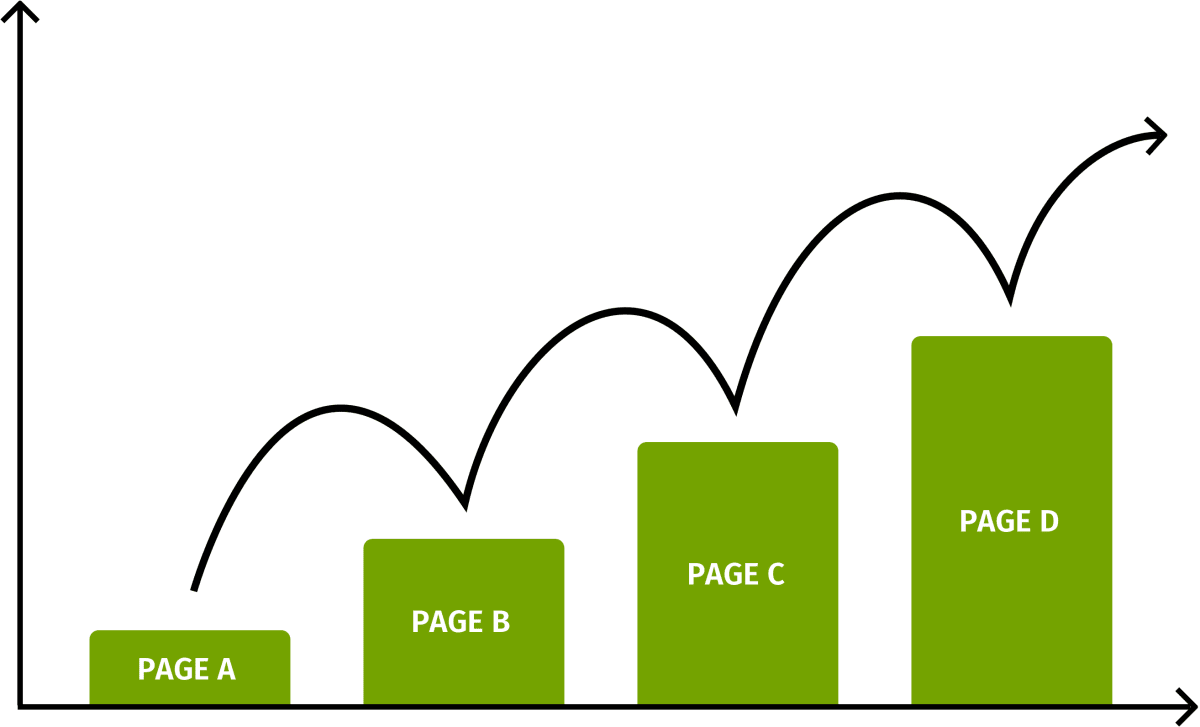
Peak season makes this even more powerful. With higher traffic, your tests reach their conclusion faster, so you can find and apply winning ideas more quickly.
The real risk isn’t testing. It’s standing still when the upside is highest.
Are you ready for your peak season?
By now, you’ve seen the truth that successful seasonal businesses already recognize: CRO is a continual process, not a seasonal one.
Between the overwhelm of peak season and the paradox of low traffic, teams rarely give themselves enough time. Without the runway required to do proper research, build strong hypotheses, or get A/B tests ready, they default to the behaviour they should avoid: guessing, rushing, and making changes based on opinion rather than evidence.
There’s an enormous opportunity cost to waiting until things get urgent, but for seasonal businesses that optimize continually, the rewards can be immense.
Seasonal CRO in action
Finally, to demonstrate the practical value of these techniques, here are a few Win Reports we’ve published for seasonal businesses.
Win Report: How trust signals turned suspicion into 16% more signups
How addressing key customer objections—trust and payment flexibility—helped increase signups by 16%, using targeted research and simple on-page messaging to turn scepticism into action.

Win Report: How removing content increased conversions by 36%
Removing a poorly performing top section from iFLY’s birthday page revealed more engaging, benefit-led content—leading to a 36% increase in conversions and a 47% boost in revenue per customer.

Win Report: How becoming the customer helped us increase conversions by 26%
A simple messaging change, inspired by first-hand customer experience, replaced a confusing “free shipping” claim with credible social proof—resulting in a 26% uplift in conversions and a 31% increase in revenue.
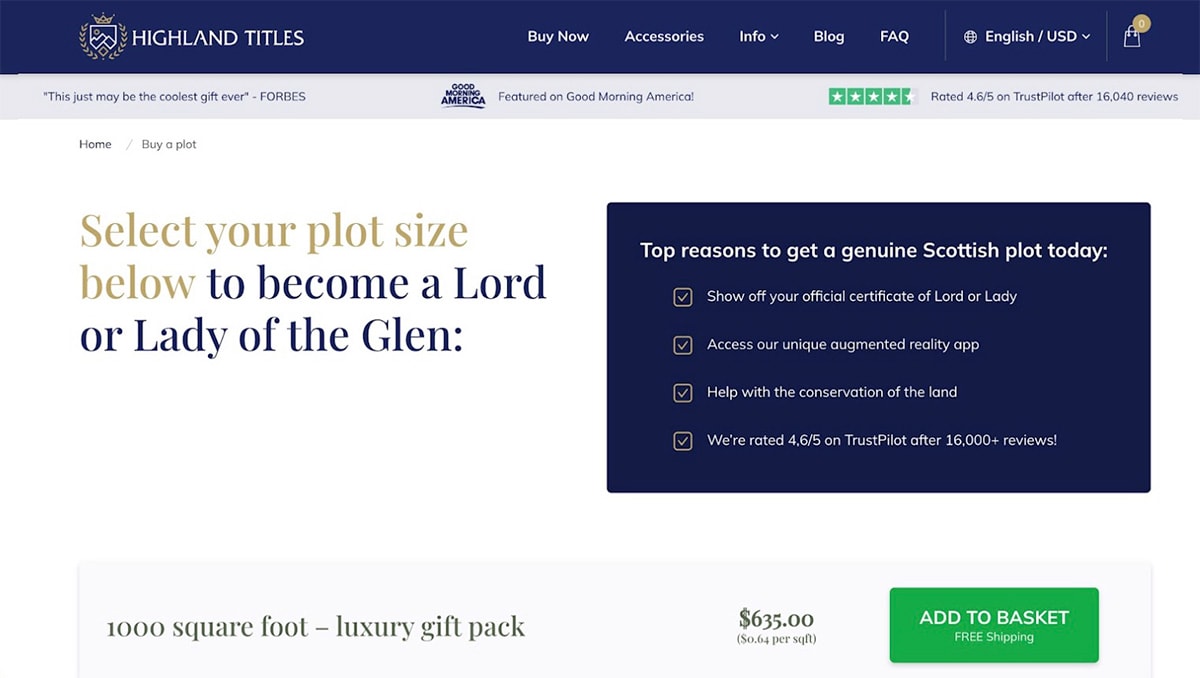
Win Report: How research‑inspired bullets grew conversions by 12%
How customer research reshaped product page bullets to emphasise conservation, social proof, and perceived value—driving a 12% uplift in conversions and a 27% increase in revenue.
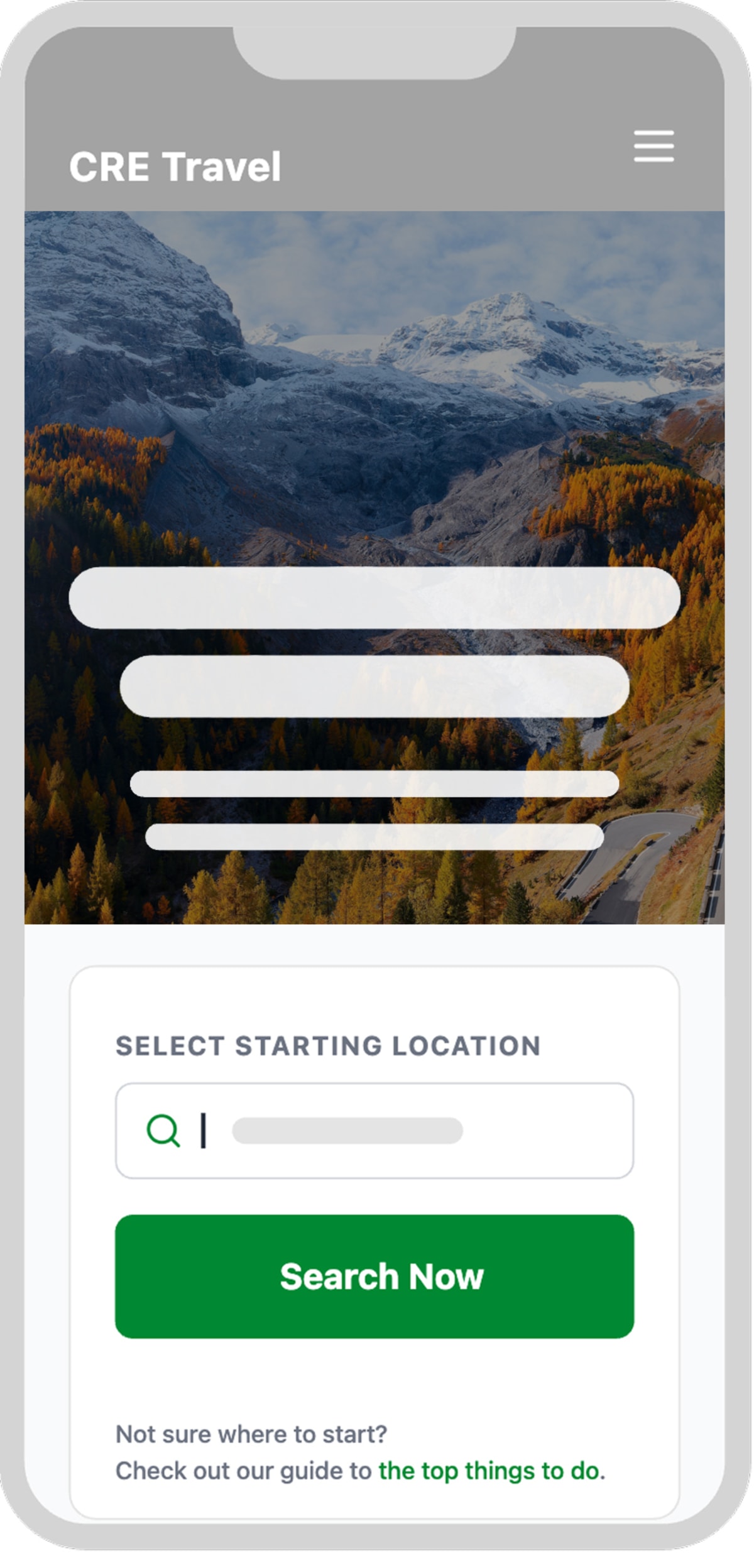
Win Report: How an appeal to emotion doubled conversions
A travel booking platform doubled conversions by replacing a form-heavy homepage with inspiring visuals and a simplified search. The test highlights how engaging visitors emotionally before asking for input can significantly boost results.
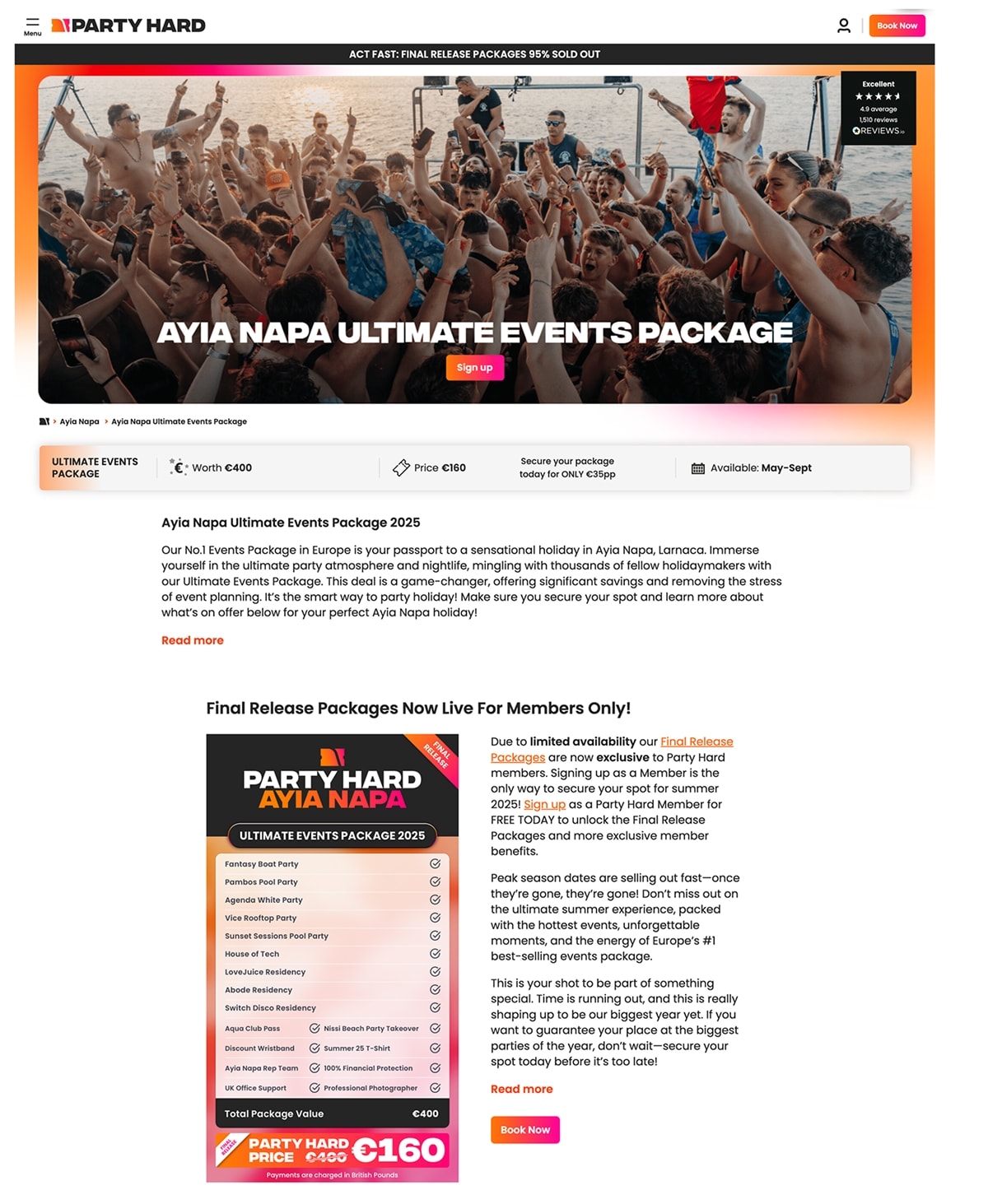
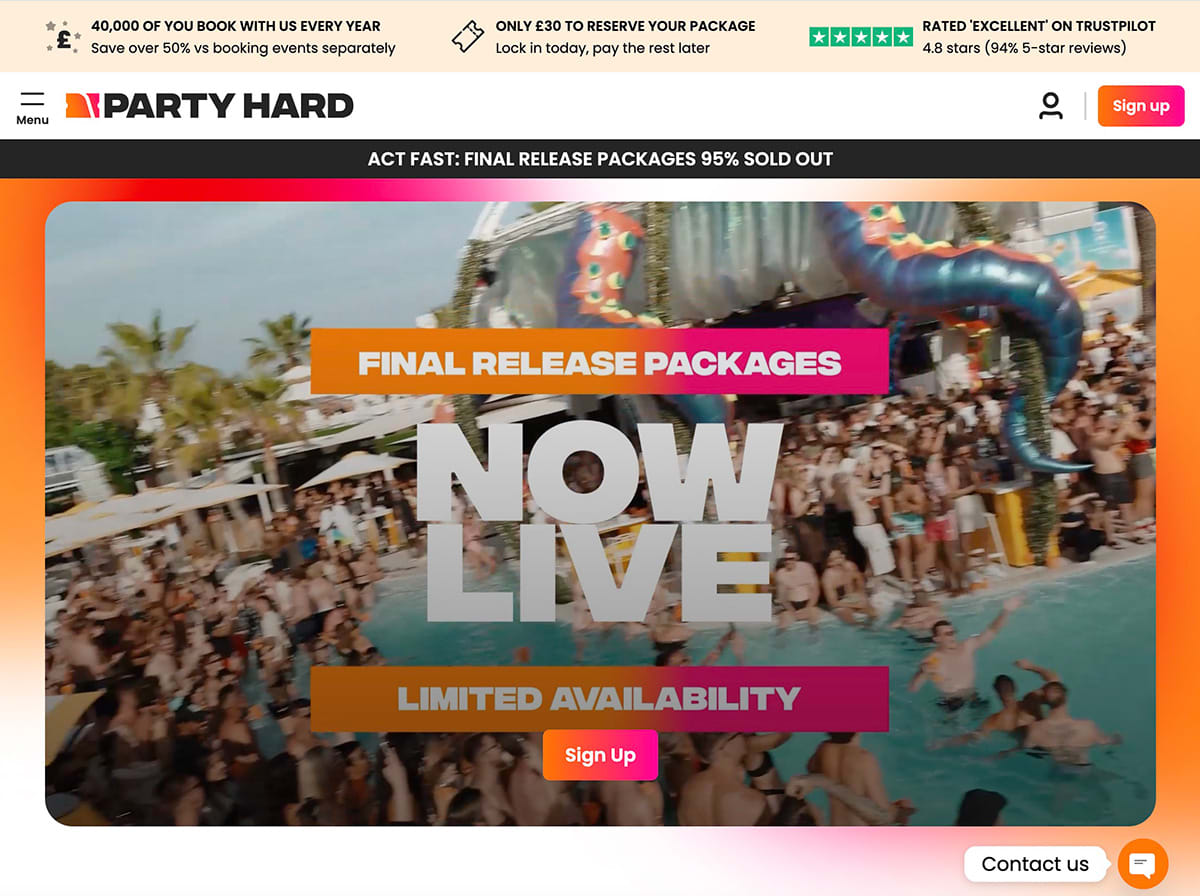
Win Report: Less hero, more party (and 5% more sign-ups)
Small, strategic changes to the top of Party Hard Travel’s pages—reducing the hero image, surfacing trust signals, and improving navigation—helped more visitors see key content, resulting in a 5% increase in signups.
How much did you like this article?
What’s your goal today?
1. Hire us to grow your company
We’ve generated hundreds of millions for our clients, using our unique CRE Methodology™. To discover how we can help grow your business:
- Read our case studies, client success stories, and video testimonials.
- Learn about us, and our unique values, beliefs and quirks.
- Visit our “Services” page to see the process by which we assess whether we’re a good fit for each other.
- Schedule your FREE website strategy session with one of our renowned experts.
Schedule your FREE strategy session
2. Learn how to do conversion
Download a free copy of our Amazon #1 best-selling book, Making Websites Win, recommended by Google, Facebook, Microsoft, Moz, Econsultancy, and many more industry leaders. You’ll also be subscribed to our email newsletter and notified whenever we publish new articles or have something interesting to share.
Browse hundreds of articles, containing an amazing number of useful tools and techniques. Many readers tell us they have doubled their sales by following the advice in these articles.
Download a free copy of our best-selling book
3. Join our team
If you want to join our team—or discover why our team members love working with us—then see our “Careers” page.
4. Contact us
We help businesses worldwide, so get in touch!
© 2026 Conversion Rate Experts Limited. All rights reserved.
A Brandwidth Group Company.